Wednesday, 29 April 2020

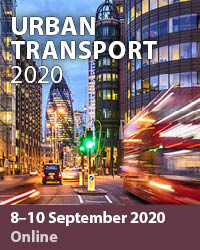
Urban Transport 2020 - Call for papers

26th International Conference on Urban Transport and the Environment

8–10 September 2020
Bilbao, Spain


Introduction
The International Conference on Urban Transport and the Environment has successfully been reconvened for 26 years, always attracting a wide international spread of delegates. It is well-established as the premier event of its type.

The continuing requirement for better urban transport systems and the need for a healthier environment has added to the increasing success of this annual meeting which attracts international delegates from many different countries. Innovative systems, new approaches and original ideas need to be thoroughly tested and critically evaluated before they can be implemented in practice, which highlights the importance of the meeting. Moreover, there is a growing need for integration with telecommunications systems and IT applications in order to improve safety, security and efficiency. The meeting also addresses the need to solve important pollution problems associated with urban transport in order to achieve a healthier environment.

The variety of topics covered by the conference reflects the complex interaction of the urban transport systems with their environment and the need to establish integrated strategies. The aim is to arrive at optimal socio-economic solutions while reducing the negative environmental impacts of current transportation systems.

The conference started in Southampton in 1995; continuing in Barcelona (1996); Acquasparta, Italy (1997); Lisbon (1998); Rhodes (1999); Cambridge, UK (2000); Lemnos, Greece (2001); Seville (2002); Crete (2003); Dresden (2004); Algarve (2005); WIT Campus in the New Forest (2006); Coimbra (2007); Malta (2008); Bologna (2009); Limassol (2010); Pisa (2011), A Coruña (2012), Kos (2013), Algarve (2014), Valencia (2015), Crete (2016), Rome (2017), Seville (2018) and Aveiro (2019). All papers are included in the WIT Transactions and archived in the Wessex Institute’s eLibrary at http://www.witpress.com/elibrary, where they are permanently and easily available to the international community.

Conference Topics
The following list covers some of the topics to be presented at Urban Transport 2020. Papers on other subjects related to the objectives of the conference are also welcome.
  •     Urban transport planning, control, management and land use
  •     Mobility and public space
  •     Smart city transport
  •     Aerial urban transportation
  •     City logistics
  •     Freight transport
  •     Public transport systems, policies and governance
  •     Environmental impact
  •     Economic and social impact
  •     Railway systems
  •     Innovative transport systems and ecomobility
  •     Integrated network systems and intermodal transport systems
  •     Innovative electric transportation
  •     Traditional and alternative fuels and energy
  •     Safety and security in transportation
  •     Travel behaviour studies
  •     Transport modelling and simulation
  •     Transportation infrastructure development
  •     Intelligent and advanced transport systems
  •     Mass transport strategies
  •     Transdisciplinary approaches to transportation studies
  •     Life cycle assessment
  •     Accessible and inclusive transport
  •     Case studies
 Find out more on the conference webpage.

Monday, 27 April 2020

Eco-Architecture 2020 - Call for Papers

8th International Conference on Harmonisation between Architecture and Nature

7–9 September 2020
Bilbao, Spain


Introduction
The objective of this Conference is to review the challenges and new opportunities for contemporary architecture. These are a result of advances in design and new building technologies, as well as the development of new materials.

Many of the changes are motivated by a drive towards eco-architecture, trying to harmonise architectural products with nature. Another important issue is the adaptation of the architectural design to the natural environment, learning from nature and traditional construction techniques.

Contemporary architecture is at the threshold of a new stage of evolution, deeply influenced by the advances in information and computer systems and the development of new materials and products, as well as construction processes that will drastically change the industry.

Emphasis is placed on the minimum use of energy at each stage of the building process, the design by passive systems, life cycle assessment, resources optimisation and rehabilitation.

Never before in history have architects and engineers had such a range of new processes and products open to them. In spite of that, the construction industry lags behind all others in taking advantage of a wide variety of new technologies. This is understandable, due to the inherent complexity and uniqueness of each architectural project. Advances in computer and information systems, including robotics, offers the possibility of developing new architectural forms, construction products and building technologies which are just now starting to emerge.

Changes have also taken place in the way modern society works and lives, due to the impact of modern technologies. Patterns of work have been disrupted and changed, affecting transportation and the home environment. The demand is for a new type of habitat that can respond to the changes and the consequent requirements in terms of the urban environment.

The conference will deal with topics such as building technologies, design by passive systems, design with nature, cultural sensitivity, life cycle assessment, resources and rehabilitation and many others including case studies from many different places around the world. The list of topics gives an idea of the scope of the meeting, papers on other topics relating to the conference objectives are welcome.

All conference papers are archived online in the WIT eLibrary (www.witpress.com/elibrary) where they are easily and permanently available in Open Access format to the international community.

Architecture is very multi-disciplinary, attracting many different professions. In this regard the conference participants are expected to be engineers, planners, computer experts, physical scientists, sociologists and economists, as well as architects, providing all of them an opportunity to share information and ideas with their colleagues from different regions of the world.

The eighth International Conference follows the seven successful meetings which started in the New Forest, home of the Wessex Institute of Technology, in 2006; and followed in the Algarve (2008); A Coruna (2010), the island of Kos (2012), Siena (2014), Alicante (2016), New Forest, UK (2018).

Topics
The following list covers some of the topics to be presented at Eco-Architecture 2020. Papers on other topics related to the objectives of the conference are also welcome.

Design
  •     Design with nature
  •     Passive systems
  •     Building information modelling
  •     Bioclimatic design
  •     Transformative design
  •     Contemporary habitat typologies
  •     Smart houses
  •     Building flexibility
  •     Adapted reuse
  •     Sustainability indices in architecture
  •     Circular economy
Building technology
  •     Innovative materials and products
  •     Green facades
  •     Integrated renewable systems
  •     Advanced building envelope
  •     Performance assessment
  •     Regenerative buildings
  •     Ecological impacts of materials
  •     Life cycle assessment and durability
  •     Recycle, reuse, reduce and recovery
  •     Eco-design and Eco-labelling
Built environment
  •     Design and construction integration
  •     Flexible housing
  •     Floating buildings
  •     Tall buildings and environment
  •     Energy performance
Society
  •     Community participation
  •     Education and training
  •     End-use energy efficiency
  •     Consumer engagement
  •     Occupants’ behaviour
  •     Houses as a working environment
  •     Management and maintenance
  •     Ecological and cultural sensitivity
  •     Impact of technology
  •     Post-occupancy evaluation
  •     Urban landscaping, agriculture and green spaces
Case studies

 Find out more on the conference webpage.

Friday, 24 April 2020

HPSM/OPTI 2020 - Call for Papers

10th International Conference on High Performance and Optimum Design of Structures and Materials

2–4 September 2020 (Revised Dates)
Prague, Czech Republic


Introduction
The use of novel materials and new structural concepts nowadays is not restricted to highly technical areas like aerospace, aeronautical applications or the automotive industry, but affects all engineering fields including those such as civil engineering and architecture.

The conference addresses issues involving advanced types of structures, particularly those based on new concepts or new materials and their system design. Contributions will highlight the latest development in design, optimisation, manufacturing and experimentation in those areas. The meeting also aims to search for higher performance sustainable materials.

Most high performance structures require the development of a generation of new materials, which can more easily resist a range of external stimuli or react in a non-conventional manner. Particular emphasis will be placed on intelligent structures and materials as well as the application of computational methods for their modelling, control and management.

The conference also addresses the topic of design optimisation. Contributions on numerical methods and different optimisation techniques are also welcome, as well as papers on new software. Optimisation problems of interest to the meeting involve those related to size, shape and topology of structures and materials. Optimisation techniques have much to offer to those involved in the design of new industrial products.

The development of new algorithms and the appearance of powerful commercial computer codes with easy to use graphical interfaces has created a fertile field for the incorporation of optimisation in the design process in all engineering disciplines.

This scientific event is a new edition of the High Performance and Optimum Design of Structures and Materials Conference and follows the success of a number of meetings on structures and materials and on optimum design that originated in Southampton as long ago as 1989. As the meetings evolved they gave rise to the current series, which started in Seville in 2002, and followed by Ancona in 2004, Ostend in 2006, the Algarve in 2008, Tallinn in 2010, the New Forest, home of the Wessex Institute in 2012, Ostend in 2014, Siena in 2016 and Ljubljana in 2018.

The meeting will provide a friendly and useful forum for the interchange of ideas and interaction amongst researchers, designers and scholars in the community to share advances in the scientific fields related to the conference topics.

Topics
The following list covers some of the topics to be presented at HPSM/OPTI 2020. Papers on other topics related to the objectives of the conference are welcome
  •     Composite materials
  •     Material characterisation
  •     Experiments and numerical analysis
  •     Natural fibre composites
  •     Nanocomposites
  •     Green composites
  •     Composites for automotive applications
  •     Transformable structures
  •     Environmentally friendly and sustainable structures
  •     Structural optimisation
  •     Reliability based design optimisation
  •     Non deterministic approaches
  •     Evolutionary methods in optimisation
  •     Aerospace structures
  •     Biomechanics application
  •     Structures under extreme loading
  •     Surface modification
  •     Lightweight structures
  •     Design for sustainability
  •     Design for durability
  •     Lifecycle assessment
  •     Structural reliability
  •     Smart materials and structures
  •     Optimization of civil engineering structures
  •     Optimization in mechanical engineering
  •     Optimization in the car industry
  •     Design optimization of tall buildings
  •     Metaheuristic algorithms
  •     New algorithms for size and topology optimisation
  •     BIM tools for design optimization
  •     Emerging materials
  •     Case Studies
 Find out more on the conference webpage.

Wednesday, 22 April 2020

AFM 2020 - Call for Papers

13th International Conference on Advances in Fluid Mechanics

1–3 September 2020 (Revised Dates)
Prague, Czech Republic


Introduction
AFM 2020 is the 13th International Conference on Advances in Fluid Mechanics. The meeting is reconvened following the success of all previous conferences in the series, the first of which took place in New Orleans (1996), followed by Udine (1998); Montreal (2000); Ghent (2002); Lisboa (2004); Skiathos (2006); the New Forest, home of the Wessex Institute (2008); The Algarve (2010); Split (2012); A Coruña (2014), Ancona (2016) and Ljubljana (2018).

The success of the Conference continues to attract high-quality contributions presenting original results. The evolution of the meeting is reflected in the variety of topics and applications published in the conference book series since its beginnings in 1996.

The field of fluid mechanics is vast and has numerous and diverse applications. The conference covers a wide range of topics, including basic formulations and their computer modelling as well as the relationship between experimental and analytical results. The emphasis is on new applications and research currently in progress.

The papers – like others presented at Wessex Institute conferences – are part of the WIT Transactions in Engineering Sciences series and are archived online in the WIT eLibrary (www.witpress.com/elibrary), where they are freely available to the international scientific community.

The objective of the meeting is to provide a forum for discussing new work in fluid mechanics and, in particular, for promoting the interchange of new ideas and the presentation on the latest applications in the field.

Topics
The following list covers some of the topics to be presented at AFM 2020. Papers on other topics related to the objectives of the conference are welcome
  •     Computational methods
  •     Boundary elements and other mesh reduction methods
  •     Fluid structure interaction
  •     Multiphase heat transfer
  •     Environmental fluid dynamics
  •     Industrial applications
  •     Energy harvesting
  •     Nano and micro fluids
  •     Complex flows
  •     Jets
  •     Droplet and spray dynamics
  •     Bubble dynamics
  •     Multiphase fluid flow
  •     Pumping and fluid transportation
  •     Experimental measurements
  •     Complex and non-Newtonian fluids
  •     Chemical reaction flow
  •     Hydroelectromagnetic flow
  •     Hypersonic flows
  •     Wave theory
  •     Acoustics of noise propagation
  •     Theoretical methods
  •     Nanotechnology applications in fluids and heat transfer
  •     Bluff body aerodynamics
  •     Aerodynamic shape optimization
  •     Case Studies
 Find out more on the conference webpage.

Monday, 20 April 2020

Sustainable Tourism 2020 - Call for Papers

9th International Conference on Sustainable Tourism

8–10 July 2020
Online


Introduction
Sustainable Tourism 2020 is the ninth meeting organised in this successful series. The first was held in Segovia (2004), followed by Bologna (2006), Malta (2008), the New Forest, home of the Wessex Institute (2010), A Coruña (2012), Opatija, Croatia (2014), Valencia (2016) and Vienna (2018).

Today, tourism is an important component of development, not only in economic terms but also for knowledge and human welfare. Tourism today is an activity accessible to a growing number of people.

The phenomenon has many more advantages than disadvantages. New forms of economic development and increasing wealth of human societies depend on tourism. Our knowledge of the world now includes a strong component due to tourism. Human welfare has physiological and psychological elements, which tourism promotes, both because of the enjoyment of knowing new territories and increasing contacts with near or far away societies and cultures.

The tourism industry has nevertheless given rise to some serious concerns, including social costs and ecological impacts. Many ancient local cultures have practically lost their identity. Their societies have orientated their economy only to this industry. Both the natural and cultural – rural or urban – landscapes have also paid a high price for certain forms of tourism. These problems will persist if the economic benefit is the only target, leading to economic gains that eventually become ruinous. It is also important to consider that visitors nowadays are increasingly demanding in cultural and environmental terms.

Never before have transport and communication links been so important as today. Natural ecosystems are now a rarity on the planet and ecologists talk today about ‘socio-ecosystems’. Given this, tourism and environmental education are facing a major challenge.

Tourism also plays an important role in the natural environmental changes that are strongly affected by technological and social developments. Natural changes are inherent in the Earth’s ecosystem (the ‘ecosphere’). Also, technological and social changes are inherent to mankind (the ‘noosphere’) and are now becoming widespread. Cities are growing rapidly and industry requires increasingly larger areas. Many traditional rural areas are being abandoned. However, many historic agricultural districts have maintained, or even recovered, their local population numbers through intelligent strategies of tourism focused on nature and rural culture. Natural landscapes and biodiversity are becoming increasingly appreciated. The tourism industry must be able to respond to these aspirations.

Sustainable Tourism 2020 aims to find ways to protect the natural and cultural landscape through the development of new solutions which minimise the adverse effects of tourism. This can be achieved through new strategies involving the active collaboration of society as a whole.

All papers presented at previous Sustainable Tourism Conferences as well as all other meetings organised by the Wessex Institute since 1993 are freely available in the WIT eLibrary (www.witpress.com/elibrary).

Topics
The following list covers some of the topics to be presented at the conference. Papers on other topics related to the objectives of the meeting are also welcome.
  •     Tourism strategies
  •     Environmental issues
  •     Climate change
  •     Safety and security
  •     Tourism as a tool of development
  •     Heritage tourism
  •     Marine and coastal areas tourism
  •     Sport tourism
  •     Tourism impact
  •     Tourism and protected areas
  •     Ecotourism
  •     Rural tourism
  •     Tourism and technology
  •     Industrial tourism
  •     Transport and tourism
  •     Education and tourism
  •     Destination management
  •     eTourism
  •     Simulation models
  •     Social and physical infrastructure
  •     Gastronomic tourism
  •     The role of the landscape on tourism
  •     Dark tourism
  •     Project image
  •     Sustainability assessments
  •     Cultural tourism
  •     Medical and health tourism
  •     Tourism and nature
  •     The role of local communities
  •     Case studies
 Find out more on the conference webpage.

Friday, 17 April 2020

Waste Management 2020 - Call for Papers

10th International Conference on Waste Management and the Environment

7–9 July 2020
Online


Introduction
The International Conference on Waste Management and the Environment is organised every two years by the Wessex Institute. This ninth conference follows the success of previous meetings held in Cadiz (2002); Rhodes (2004); Malta (2006); Granada (2008); Tallinn (2010); the New Forest, home of the Wessex Institute (2012); Ancona (2014); Valencia (2016) and Seville (2018).

The conference provides a forum for the exchange of scientific information and works on the current situation of waste management amongst professionals, researchers, government departments and local authorities.

Waste Management is one of the key problems of modern society due to the ever-expanding volume and complexity of discarded domestic and industrial waste.

Society is increasingly aware of the need to establish better practices and safer solutions for waste disposal. This requires further investigation into disposal methods and recycling as well as new technologies to monitor landfills, industrial mining wastes and chemical and nuclear repositories.

This creates a need for more research on current disposal methods such as landfills, incineration, chemical and effluent treatment, as well as recycling, clean technologies, waste monitoring, public and corporate awareness and general education.

Unfortunately, many of the policies adopted in the past were aimed at short term solutions without due regard to the long term implications on health and the environment, leading in many cases to the need to take difficult and expensive remedial action.

The desired direction of Waste Management is towards sustainable strategies. The approach which has emerged as the most promising has been called 4Rs, where reduction, reuse, recycling and recovery are seen as the best actions. This largely decreases the volume of waste that needs final disposal. Recovery refers to the establishment of two new classifications, those of Secondary Raw Materials (SRM) and of Refuse Derived Fuel (RDF). They both relate to useful products obtained from waste and make a shift from the mere recycle or reuse – mostly seen as a way to reduce dumping – to the valuable employment of such matter within the production cycle.

More recently these concepts have given rise to the new model of the ‘Circular Economy’, which is based on the reuse of what up to now has been considered waste, reintroducing them into the production cycle. The objective of the circular economy is to reduce consumption and achieve savings in the use of raw materials, water and energy, throughout all processing phases and during production, which ought to be as efficient as possible.

Another aspect of this revolution is happening subtly and gradually by people buying waste; particularly eWaste and some types of plastic, the so-called technical waste. This is happening due to the strong demand and high price of certain new materials and the possibility of sorting out waste in developing regions of the world. As a result, a market in Secondary Raw Materials (SRM) has developed.

A major cause of concern is the implications of waste management on health and the environment. The conference discusses some of these topics and the need to arrive at suitable strategies to waste management.

Further steps are required towards the improvement of current technologies, increased collaboration between the public, government and private sectors and increased involvement of all stakeholders.

Topics
The following list covers some of the topics to be presented at the conference. Papers on other topics related to the objectives of the meeting are also welcome.
  •     Environmental impact
  •     Reduce, reuse, recycle and recovery (4Rs)
  •     The circular economy
  •     Secondary raw materials (SRM)
  •     Energy from waste
  •     Industrial waste management
  •     Hazardous waste
  •     Agricultural waste
  •     Wastewater
  •     eWaste
  •     Landfill design and management
  •     Waste monitoring
  •     Thermal treatment
  •     Environmental remediation
  •     Municipal waste management
  •     Behavioural issues
  •     Health care waste
  •     Decommissioning
  •     Radioactive waste management
  •     Waste treatment technologies and innovation
  •     Emerging issues in waste management
  •     Organic waste management
  •     Water microbiology & bio-hydrometallurgy
  •     Case studies
Find out more on the conference webpage.

Wednesday, 15 April 2020

COMPRAIL 2020 - Call for Papers

17th International Conference on Railway Engineering Design & Operation

1–3 July 2020
Online


Introduction
The 17th International Conference on Railway Engineering Design and Operation (COMPRAIL 2020), is the latest in a series of very successful meetings which started in Frankfurt in 1987 and continued in Rome (1990); Washington (1992); Madrid (1994); Berlin (1996); Lisbon (1998); Bologna (2000); Lemnos (2002); Dresden (2004); Prague (2006); Toledo (2008); Beijing (2010); the New Forest, home of the Wessex Institute (2012) ; Rome (2014), Madrid (2016) and Lisbon (2018).

The meeting is organised by the Wessex Institute and sponsored by WIT Transactions on the Built Environment and the International Journal of Transport Development and Integration.

The conference aims to update the use of advanced systems, promoting their general awareness throughout the management, design, manufacture and operation of railways and other emerging passenger, freight and transit systems. It emphasises the use of computer systems in advanced railway engineering.

The meeting attracts a variety of specialists interested in the development of railways, including managers, consultants, railway engineers, designers of advanced train control systems and computer specialists. It provides a forum for researchers, academics and practitioners involved in railway engineering to present and discuss the latest developments.

Since 1993 all published papers are permanently archived in the Wessex Institute eLibrary (www.witpress.com/elibrary), where they are freely available to the international community.

Topics
The following list covers some of the topics to be presented at COMPRAIL 2020. Papers on other subjects related to the objectives of the conference are also welcome.
  •     Advanced train control
  •     Operational quality
  •     Risk management
  •     Planning and policy
  •     Monitoring and maintenance
  •     Energy efficiency and power supply
  •     Signalling and train control systems
  •     Timetabling and rescheduling
  •     Safety and security
  •     Vehicle dynamics
  •     Driverless and automatic train operation
  •     System integration
  •     High-speed technology
  •     Interoperability
  •     Modelling and simulation
  •     Multi-modal integration
  •     Magnetic levitation vehicles
  •     Telecommunications in rail transport
  •     Freight transport
  •     Real-time operations
  •     Ticketing
  •     Single track traffic
  •     Track design and maintenance strategies
  •     Intelligent railway systems
  •     Road and rail synergy
  •     Electrical railroad
  •     Railway logistics
  •     Passenger guidance and user behaviour
  •     High-density rails
  •     Railway resilience
  •     Environmental impact and CO2 reduction
  •     IoT applications to railway vehicles
  •     Case studies
 Find out more on the conference webpage.