Monday, 13 April 2020

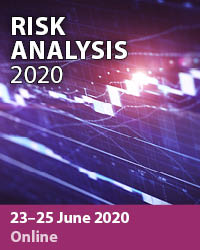
Risk Analysis 2020 - Call for Papers

12th International Conference on Risk Analysis and Hazard Mitigation

23–25 June 2020
Online


Introduction
Risk Analysis 2020 is the 12th International Conference on Risk Analysis and Hazard Mitigation. Risk Analysis 2020 follows on from the other successful meetings in this series, which first started in Valencia, Spain (1998) and continued in Bologna, Italy (2000); Sintra, Portugal (2002); Rhodes, Greece (2004); Malta (2006); Cephalonia, Greece (2008); Algarve, Portugal (2010); the island of Brac in Croatia (2012), the New Forest, home of the Wessex Institute of Technology (2014), Crete, Greece (2016) and Seville, Spain (2018).

The conference covers a series of important topics of current research interests and many practical applications. It is concerned with all aspects of risk analysis and hazard mitigation, associated with both natural and anthropogenic hazards.

Current events help to emphasise the importance of the analysis and management of risk to planners and researchers around the world. Natural hazards such as floods, earthquakes, landslides, fires and others have always affected human societies. The more recent emergence of the importance of man-made hazards is a consequence of the rapid technological advances made in the last few centuries. The interaction of natural and anthropogenic risks adds to the complexity of the problems.

The papers presented at the Risk Analysis Conferences cover a variety of topics related to risk analysis and hazard mitigation. They are published as volumes of WIT Transactions on Engineering Sciences, which is widely disseminated around the world in both hardcover and digital formats. Furthermore, all the papers are also archived in the WIT eLibrary (www.witpress.com/elibrary), where they are freely and permanently available to the international scientific community.

Topics
The following list covers some of the topics to be presented at the Conference. Papers on other subjects related to the objectives of the meeting are also welcome.
  •     Risk analysis, assessment and management
  •     Early warning and vulnerability
  •     Temporal and spatial aspects of risk
  •     Disaster management
  •     Vulnerability assessment
  •     Health risk
  •     Natural disasters (climate change, earthquakes, floods)
  •     Engineering risk (construction and transportation)
  •     Safety and security
  •     Evacuation, simulation and design
  •     Political and socio-economic risk
  •     Community and economic resilience
  •     Communication of risk
  •     Insurance
  •     Economic risk
  •     Cyber risk
  •     Risk in critical infrastructures
  •     Fire planning
  •     Environmental security
  •     Risk management in the oil and gas industry
  •     Advances in fundamentals of risk analysis
  •     Case studies
 Find out more on the conference webpage.

Friday, 10 April 2020

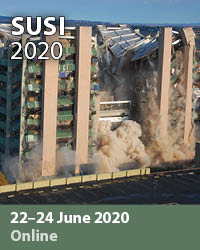
SUSI 2020 - Call for Papers

16th International Conference on Structures Under Shock and Impact

22–24 June 2020
Online


Introduction
SUSI 2020 is the 16th International Conference in the successful series of Structures Under Shock and Impact. The first conference started in Cambridge, Massachusetts, (1989) and continued in Portsmouth, UK (1992); Madrid, Spain (1994); Udine, Italy (1996); Thessaloniki, Greece (1998); Cambridge, UK (2000); Montreal (2002); Crete (2004); the New Forest, home to the Wessex Institute (2006); the Algarve, Portugal (2008); Tallinn, Estonia (2010), Kos, Greece (2012); The New Forest, UK (2014); Crete, Greece (2016) and Seville, Spain (2018).

The increasing need to protect civilian infrastructure and industrial facilities against unintentional loads arising from accidental impact and explosion events as well as terrorist attacks is reflected in the sustained interest in the SUSI meetings over three decades. While advances have been made over this period, many challenges remain, such as to develop more effective and efficient blast and impact mitigation approaches than those that currently exist. The primary focus remains the survivability of physical facilities and the protection of people, as well as reducing economic losses and impact on the environment, with emphasis on innovative protective technologies to support the needs of an economically growing, modern society. The application of this technology ranges from the safe transportation of people and dangerous materials to defences against natural hazards such as floods, wind, storms, tsunamis and earthquakes.

Large scale testing is prohibitive and small scale laboratory testing results in scaling uncertainties. Continuing research is therefore essential to improve knowledge on how these structures behave under a variety of load actions, some of which interact making it even more complex and difficult to define. Consequently, more use of advanced numerical simulations for load and structural response calculations is common practice in industry and research. Such calculations can directly be used in design and risk assessment calculations, but also be applied to more simplified design tools and design codes. Whether numerical or analytical modelling techniques are employed, experimental validation is vital for there to be acceptance of the approach to be used. The SUSI meeting over the years has fulfilled many objectives, not least to provide a forum for the exchange of research ideas and results to promote a better understanding of these critical issues relating to the testing behaviour, modelling and analyses of protective structures against blast and impact loading.

It is the objective of these meetings to bring together scientists and engineers from a wide range of academic disciplines and industrial backgrounds who have an interest in the structural impact and blast response of structures and materials. In this way, the major developments in different areas can be brought to the attention of the entire community.

All papers presented at the SUSI conference since 1994 are archived in the WIT eLibrary (www.witpress.com/elibrary), where they are accessible to the international community.

Topics
The following list covers some of the topics to be presented at the Conference. Papers on other subjects related to the objectives of the meeting are also welcome
  •     Impact and blast loading
  •     Energy absorbing issues
  •     Computational and experimental results
  •     Response of reinforced concrete under impact
  •     Response of buildings to blast
  •     Seismic behaviour
  •     Protection of existing structures
  •     Industrial accidents and explosions
  •     Hazard mitigation and assessment
  •     Security issues
  •     Response of composite structures to blast and impact
  •     Vehicle impact
  •     Ballistics analysis
  •     Dynamic material behaviour
  •     Structural design against multiple based activities
  •     Fluid-structure interaction
  •     Multiphysics coupled problems
  •     Case studies
 Find out more on the conference webpage.

Wednesday, 8 April 2020

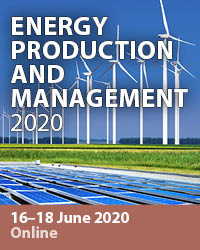
Energy Production and Management 2020 - Call for Papers

4th International Conference on Energy Production and Management: The Quest for Sustainable Energy

16–18 June 2020
Online


Introduction
The 4th International Conference on Energy Production and Management follows the very successful meetings held in Ekaterinburg (2014), Ancona (2016) and New Forest, UK (2018), home of the Wessex Institute. The aim of the meeting is to discuss the future of energy production, operation and management in a changing world.

The objective is to compare conventional energy sources, particularly hydrocarbons, with a number of other ways of producing energy, emphasising new technological developments, based on renewable resources such as solar, hydro, wind and geothermal.

A key issue is the conversion of new sustainable sources of energy into useful forms (electricity, heat, fuel) while finding efficient ways of storage and distribution. In many cases, the challenges lie as much with the production of such renewable energy at an acceptable cost, including damage to the environment, as with the integration of those resources into the existing infrastructure.

The changes required to progress from an economy based mainly on hydrocarbons to one taking advantage of sustainable energy resources are massive and require considerable scientific research as well as the development of advanced engineering systems. Such progress demands close collaboration between different disciplines in order to arrive at optimum solutions.

The Conference also discusses the energy use of industrial processes, including the imbedded energy contents of materials, such as those in the built environment. Energy production, operation, distribution and usage, result in environmental risks which need to be better understood. They are part of the energy economics and relate to human environmental health as well as ecosystems behaviour.

An important objective of the conference is to discuss ways in which more efficient use can be made of conventional as well as new energy sources. This relates to savings in energy consumption, reduction of energy losses, as well as the implementation of smart devices and the design of intelligent distribution networks.

All published papers from previous meetings are permanently archived in the Wessex Institute eLibrary (www.witpress.com/elibrary) where they are freely available to the international community.

Conference Topics
The following list covers some of the topics to be presented at the Conference. Papers on other subjects related to the objectives of the meeting are also welcome.
  •     Energy policies
  •     Energy management and economics
  •     Energy conversion and generation
  •     Energy efficiency
  •     Energy sustainability
  •     Energy safety and security
  •     Smart grids
  •     Energy transmission and distribution
  •     Processing of coal, oil and gas
  •     GHG emissions
  •     Renewable energies
  •     Biomass and biofuels
  •     Solar energy: Thermal, photovoltaic, high -T
  •     Offshore and inland wind farm technologies
  •     Green power plants
  •     Geothermal energy
  •     Waste to energy
  •     Energy and the built environment
  •     Energy storage
  •     Automation of energy systems
  •     Hybrid energy systems
  •     Energy recovery
  •     Nuclear energy
  •     Environmental impact
  •     Energy and climate change
  •     Environmental sustainability
  •     Energy business
  •     Role of LNG
  •     Case studies

Find out more on the conference webpage.

Monday, 6 April 2020

Environmental Impact 2020 - Call for Papers

5th International Conference on Environmental and Economic Impact on Sustainable Development

10–12 June 2020
Online


Introduction
The 5th International Conference on Environmental and Economic Impact on Sustainable Development follows the success of four previous meetings held in the New Forest, UK, (home of the Wessex Institute of Technology) in 2012; Ancona, Italy in 2014; Valencia, Spain in 2016; and Naples, Italy in 2018.

The meeting will provide an international forum to discuss the most serious problems affecting sustainable development. The Conference will consider the impact of economic constraints on the environment, taking into account the social aspects as well as the over-use of natural resources. Uncontrolled development can also result in damage to the environment in terms of the release of toxic substances and hazardous waste.

The meeting will examine issues related to whether some forms of development are compatible with environmental protection, particularly in cases of possible serious contamination and toxicity.

The conference will address problems of great importance discussing more constructive and progressive approaches to ensure sustainability. A major motivation for the meeting is to learn from past failure, to avoid repeating similar mistakes, while attempting to prevent emerging threats to environmental and ecological systems.

Fundamental to these concepts is the analysis of the inherent risk and the development of appropriate strategies.

All published papers from previous meetings are permanently archived in the Wessex Institute eLibrary (www.witpress.com/elibrary) where they are freely available to the international community

Topics
The following list covers some of the topics to be presented at Environmental Impact 2020. Papers on other topics related to the objectives of the conference are also welcome.
  •     Environmental policies and planning
  •     Environmental assessments
  •     Human factors
  •     Sustainable cities
  •     Economic issues
  •     Natural resources management
  •     Energy and the environment
  •     Food production systems and policies
  •     Ecosystems preservation
  •     Soil pollution
  •     Remediation strategies
  •     Decommission planning
  •     Hazardous plants
  •     Brownfields rehabilitation
  •     Air and water pollution
  •     Health effects
  •     Public communication and involvement
  •     Legislation and regulations
  •     Sustainable development goals
  •     Life cycle assessments
  •     Irrigation
  •     Food recovery
  •     Stakeholders involvement
  •     Institutional issues
  •     Environmental management systems
  •     Consumption vs sustainability
  •     Social-ecological issues
  •     Sustainability appraisals
  •     Environmental strategies and tactics
  •     Food waste reduction and impact on the environment
  •     Adaptation to environmental damage
  •     Coastal zones impacts
  •     Social participation of environmental licensing
  •     Nonlinear regression analysis
  •     UN Sustainable Development Goals
  •     Case studies
Find out more on the conference webpage.

Friday, 3 April 2020

Islamic Heritage 2020 - Call for Papers

3rd International Conference on Islamic Heritage Architecture and Art

9–11 June 2020
Online


Introduction
The conference aims to highlight the importance of Islamic heritage architecture and art to the world and its influence across different regions.

The meeting will deal with the design of many types of buildings in Islamic countries, including not only the better known public buildings like mosques, mausolea, citadels and forts, but also houses and gardens, engineering works such as bridges and dams, irrigation systems and many others which have also had a profound impact on society.

Islamic architecture has enriched design with a wide variety of structural shapes, including among others, unique arches, a wide variety of vaults and domes which allow for new forms to be developed. The influence that these structural forms have in non-Islamic countries will be one of the themes of the conference.

There is much to learn from past experiences to arrive at solutions which are environmentally sound and sustainable in the long term. As conventional energy resources become scarce, the Islamic design heritage can offer invaluable lessons on how to deal in an efficient manner with cases of hard and extreme environments.

Traditional architecture and urban environments in most Islamic countries are now being eroded by overemphasis on a global type of architecture and city planning. As a consequence, many regions are losing their identity. The Conference will aim to review these developments in the light of what the classical Islamic urban designs and architectures have to offer modern society.

An equally important part of the meeting will analyse the materials employed and the types of structural elements, particularly those unique to Islamic architecture. Associated topics of discussion will include music, textiles and ceramics, which are essential parts of the architectural fabric. The conference will encompass papers on construction materials, including not only stone and brick but also more perishable materials like adobe, wood and reeds.

Preserving that heritage also requires the development of appropriate conservation techniques in response to the different materials used and the ways structural forms work, including under extreme conditions, such as earthquakes.

Papers relevant to the influence of Islamic architecture on the development of new structural form, shape and design in Western countries are particularly welcome.

The meeting will be of interest to all researchers, practitioners and government employees actively involved in the topic of Islamic heritage architecture and art.

Conference Topics

The following list covers some of the topics to be presented at the Conference. Papers on other subjects related to the objectives of the meeting are also welcome.
  •     Historical aspects
  •     Heritage studies
  •     Archaeological studies
  •     Mosques and minarets
  •     Conservation and restoration
  •     Citadels and fortifications
  •     Urban environment
  •     Baths and Caravanserais
  •     Palaces
  •     Houses and gardens
  •     Bridges and dams
  •     Irrigation systems
  •     Climate adaptability
  •     Structural characteristics
  •     The use of light and orientation
  •     Construction materials
  •     Oman and Eastern Saudi Arabian architecture
  •     Architecture in Malaysia and Indonesia
  •     Mediterranean Islamic heritage
  •     The upper Gulf (Kuwait and Basra)
  •     The central Gulf (Bahrain and Qatar)
  •     The lower Gulf architecture
  •     The Persian coast and islands
  •     The Trucial coast (Abu Dhabi, Dubai and the Northern Emirates)
  •     Classical Ottoman architecture
  •     The Balkans legacy
  •     The Black and Caspian sea legacies
  •     Islamic architecture along the Silk Road
  •     Islamic architecture in China
  •     Afghanistan and Persia
  •     Islamic architecture in the ex-Soviet republics
  •     The Indian continent
  •     Islamic architecture in Al-Andalus and other Spanish regions
  •     Influences in the Americas
  •     Islamic architecture in Africa
  •     New cities and the search for authenticity
  •     Islamic architecture in Far East countries
  •     Cross-cultural encounters
  •     Travel writings
  •     Art and literature
  •     Contemporary forms of Islamic arts
  •     Case studies
 Find out more on the conference webpage.

Wednesday, 1 April 2020

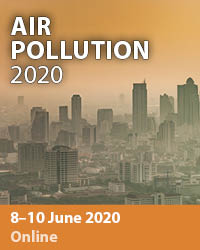
Air Pollution 2020 - Call for Papers

28th International Conference on Modelling, Monitoring and Management of Air Pollution

8–10 June 2020
Online


Introduction
Air Pollution 2020 is the 28th annual meeting in the successful series of international conferences organised by the Wessex Institute dealing with Modelling, Monitoring and Management of Air Pollution.

The meetings in this series have discussed and considered many important air pollution issues and the international nature of the attendees has ensured that the conference findings and conclusions enjoy wide and rapid dissemination amongst the air pollution science and policy communities. Air pollution issues remain one of the most challenging problems facing the international community. The series has demonstrated the wide-spread nature of the air pollution phenomena and has explored in depth their impacts on human health and the environment.

The scientific knowledge derived from well-designed studies needs to be allied with further technical and economic studies in order to ensure cost-effective and efficient mitigation. In turn, the science, technology and economic outcomes are necessary but not sufficient. Increasingly, the conference has recognised that the outcome of such research needs to be contextualised within well-formulated communication strategies that help policy makers and citizens to understand and appreciate the risks and rewards arising from air pollution management. Consequently, the series has enjoyed a wide range of high-quality papers that develop the fundamental science of air pollution and an equally impressive range of presentations that places these new developments within the frame of mitigation and management of air pollution.

This important conference brings together contributions from scientists from around the world to present recent work on various aspects of air pollution phenomena. Notable in each of the conferences in this series has been the opportunity to foster scientific exchange between participants. Each meeting has provided a further opportunity for identifying new areas of air pollution science demanding a collaborative investigation.

These meetings have attracted outstanding contributions from leading researchers. The papers selected for presentation and included in the Conference Proceedings have been permanently stored in the WIT eLibrary (www.witpress.com/elibrary) from where they can be freely downloaded. These collected papers provide an invaluable record of the development of science and policy pertaining to air pollution.

The series started in Mexico (1993) and continued in Barcelona (1994); Halkidiki (1995); Toulouse (1996); Bologna (1997); Genova (1998); San Francisco (1999); Cambridge, UK (2000); Ancona (2001); Segovia (2002); Catania (2003); Rhodes (2004); Cordoba (2005); New Forest (2006); Algarve (2007); Skiathos (2008); Tallinn (2009); Kos (2010); Malta (2011); A Coruna (2012); Siena (2013); Split (2014); Valencia (2015); Crete (2016); Cadiz (2017), Naples (2018) and Aveiro (2019).

Conference Topics
The following list covers some of the topics to be presented at Air Pollution 2020. Papers on other subjects related to the objectives of the conference are also welcome.
  •     Air pollution modelling
  •     Aerosols and particles
  •     Emission studies
  •     Health effects
  •     Indoor air pollution
  •     Monitoring and measuring
  •     Air pollution control technologies
  •     Industrial air pollution
  •     Global, regional and local studies
  •     Climate change effects
  •     Emerging pollutants
  •     Air pollution management, policy and legislation
  •     Socio-economic issues
  •     Public engagement
  •     Emerging technologies
  •     Respirables
  •     Nanoparticles
  •     Biohazards
  •     Secondary pollutants
  •     Biogenic emissions
  •     Occupational exposure
  •     Mobile sources
  •     Biomass emissions
  •     Valorisation
  •     Atmospheric modelling
  •     Pollution dynamics
  •     Air quality forecasting using satellite data
  •     Case studies

 Find out more on the conference webpage.

Thursday, 31 October 2019

BIM 2019 - Post Conference Report

3rd International Conference on Building Information Modelling (BIM) in Design, Construction and Operations

pcr.jpg

9- 11 October 2019
Seville, Spain

Overview

BIM 2019
The 3rd International Conference on Building Information Modelling (BIM) in Design, Construction and Operations took place in Seville, Spain. The Conference was organised by the Wessex Institute, UK, represented by Professor Patrick De Wilde, the University of Alicante, Spain, represented by Professor Antonio Galiano Garrigos and the University of the West of England, UK, represented by Professor Lamine Mahdjoubi.
The conference, which started in Bristol, UK in 2015, is well-established and always attracts a wide international spread of delegates. BIM provides value creation collaboration through the entire life-cycle of a built environment asset, underpinned by the data attached to it. They offer project teams, collaborative tools and opportunities for new communication structures.

Opening of the Conference

The conference was opened by the Chairs Patrick De Wilde, Antonio Galiano Garrigos and Lamine Mahdjoubi who welcomed the delegates to the conference, before paying tribute to the founder of the Wessex Institute, the late Prof Carlos A Brebbia.
Professor Patrick De Wilde then mentioned that the main object of WIT is the dissemination of knowledge, with particular emphasis on science and engineering. Another way in which this is achieved is by the publication of papers from conferences and Journals, through its publishing arm, WIT Press.

Invited Presentations

Professor Lamine Mahdjoubi gave a Keynote Address titled “Transition from building information modelling to building knowledge management: benefits and challenges” during the first morning of the conference.
In addition to the Keynote Address, there were a series of invited lectures on advanced topics of research and applications, as follows:
  • “Rewarding performance in construction”, by James Harty, Copenhagen School of Design & Technology, Denmark
  • “BIM and lean construction interactions: a state-of-the-art review”, by Antonio Galiano Garrigos and Maria Dolores Andujar Montoya, University of Alicante, Spain
  • “Computational BIM for green retrofitting of existing building envelope”, by Yaik Wah Lim, Universiti Teknologi Malaysia, Malaysia

Conference Sessions

The papers presented during the conference were classified under the following headings:
  • BIM and automation in construction
  • BIM in building operation and maintenance
  • BIM and sustainability
  • BIM standards
  • BIM and cultural heritage
There were numerous occasions for holding informal discussions during the coffee breaks and the complimentary lunches provided.

Conference Publication

Papers presented at this conference will appear in Vol. 192 of the WIT Transactions on The Built Environment (ISSN 1743-3509). Papers presented at the meeting will be available Open Access in the eLibrary of the Wessex Institute (https://www.witpress.com/elibrary) from where they can be freely downloaded by any interested parties.
Following the conference, delegates will be invited to submit an enhanced version of their conference paper to be considered for publication in one of our International Journals.

Conference Dinner

The Conference dinner took place at Restaurante Oriza, where the participants could enjoy local dishes, including fresh fish and traditional Spanish dessert known as ‘Tarta de Santiago’. The evening was particularly appreciated by the participants.

Closing of the Conference

The conference was closed by Professor Patrick De Wilde, who thanked the delegates for attending and hoped that they would consider attending the next conference in the series which is due to be reconvened in 2021.

Related Conferences

Eco-Architecture 2020, 5 - 7 May 2020
Sustainable Development and Planning 2020, 6 - 8 May 2020
HPSM/OPTI 2020, 3 – 5 June 2020
SUSI 2020, 22 – 24 June 2020
Sustainable City 2020, 22 - 24 September 2020

View Water and Society 2019 Photos