Thursday, 16 May 2019

Water Resources Management 2019 - Post Conference Report

10th International Conference on Sustainable Water Resources Management

pcr.jpg

7–9 May 2019
Alicante, Spain

Overview
Water Resources Management 2019
The 10th International Conference on Sustainable Water Resources Management took place in Alicante, Spain. The Conference was organised by the Wessex Institute, UK, represented by Professor Stefano Mambretti, and the University of Alicante, Spain, represented by Professor Joaquin Melgarejo Moreno.
The conference, which started in Halkidiki, Greece in 2001, is well-established and always attracts a wide international spread of delegates. The variety of topics covered by the conference reflects the complex interaction of water resources management while considering economic constraints and the effects on the community.

Opening of the Conference

The conference was opened by Stefano Mambretti who welcomed the delegates to the conference, before paying tribute to the founder of the Wessex Institute, the late Prof Carlos A Brebbia.
Professor Stefano Mambretti then mentioned that the main object of WIT is the dissemination of knowledge, with particular emphasis on science and engineering. Another way in which this is achieved is by the publication of papers from conferences and Journals, through its publishing arm, WIT Press.
Patricia Fernandez-Aracil of the University of Alicante gave a presentation welcoming the delegates to the University.

Invited Presentations

There were a series of invited lectures on advanced topics of research and applications, as follows:
  • “Priority water uses from 1998 to 2017 for urban, suburban and rural residents of the Pacific Northwest, USA”, by Robert Mahler, University of Idaho, USA.
  • “An integrated model to manage water scarcity in highly complex systems of south-east Spain”, by Patricia Fernandez-Aracil, University of Alicante, Spain.
  • “Constructed wetlands and their implementation on private and public land in Kathmandu Valley, Nepal”, by Zuzana Boukalova, VODNÍ ZDROJE, a.s., Czech Republic.

Conference Sessions

The papers presented during the conference were classified under the following headings:
  • Water management and planning
  • Water quality and pollutant control
  • Wastewater treatment
  • Climate change
  • Water and the community
There were numerous occasions for holding informal discussions during the coffee breaks and the complimentary lunches provided.

Technical Excursion

The delegates visited two locations, La Marjal Floodable Park and the University of Alicante Desalination Plant. La Marjal is one of the flood prevention strategies created by the local council of Alicante. The park is 36,000 m2 and can hold up to 45,000 m3 of storm water. La Marjal acts as a reservoir, collecting and storing rainwater so that it can be reused. Both the local population and tourists can visit La Marjal Floodable Park outside of the rain periods and enjoy the gardens. The University of Alicante's Reverse Osmosis Desalination Plant was built in 1996 and started its operation in January 1997. Since its starting, the water produced has been earmarked for the irrigation of the on-campus green areas. At the same time, the Plant is involved in the training of postgraduates, technicians, etc. and is visited by different university and external groups.

Conference Publication

Papers presented at this conference will appear in Vol. 229 of the WIT Transactions on Ecology and the Environment (ISSN 1743-3541). Papers presented at the meeting will be available Open Access in the eLibrary of the Wessex Institute (https://www.witpress.com/elibrary) from where they can be freely downloaded by any interested parties. A few papers were selected for publication in the International Journal of Sustainable Development and Planning. This Journal covers the subjects of environmental design and planning, environmental management, spatial planning, environmental planning, environmental management and sustainable development in an integrated way as well as in accordance with the principles of sustainability.

ISAC Meeting

The meeting of the International Scientific Advisory Committee (ISAC) of the Conference took place following the first day of conference sessions. At the meeting, members of the committee were encouraged to inform WIT of any suggestions for new topics to the conference and also discussed the evolution of the conference.

Conference Dinner

The Conference dinner took place at Darsena Restaurante, where the participants could enjoy local dishes, including an exceptional range of fresh fish and shellfish purchased daily from the nearby fish market. The evening was particularly appreciated by the participants.

Closing of the Conference

The conference was closed by Professor Stefano Mambretti, who thanked the delegates for attending and hoped that they would consider attending the next conference in the series which is due to be reconvened in 2021.

Related Conferences

Coastal Cities 2019, 11 - 13 September 2019
Sustainable City 2019, 1 - 3 October 2019
Water and Society 2019, 2 - 4 October 2019
Sustainable Development and Planning 2020, 6 - 8 May 2020
FRIAR 2020, 11 - 13 May 2020
Water Pollution 2020, 13 - 15 May 2020
Environmental Impact 2020, 10 – 12 June 2020


View Water Resources Management 2019 Photos

Thursday, 14 March 2019

BIM 2019 - Call for Papers

BIM19

3rd International Conference on Building Information Modelling (BIM) in Design, Construction and Operations

9 - 11 October 2019

Seville, Spain

Introduction

The first International Conference on Building Information Modelling (BIM) in Design, Construction and Operations took place in Bristol, UK in 2015 and reconvened in Alicante, Spain in 2017.
The modern construction industry and built environment disciplines have been transformed through the development of new and innovative BIM tools and techniques. These have fundamentally altered the manner in which construction teams operate; the processes through which designs are evolved; and the relationships between conceptual, detail, construction and life cycle stages.
BIM is essentially value-creating collaboration throughout the entire life-cycle of an asset, underpinned by the data attached to them. BIM has far and reaching consequences on both building procurement and infrastructure. This recent emergence constitutes one of the most exciting developments in the field of the Built Environment. These advances have offered project teams multi-sensory collaborative tools and opportunities for new communication structures.
The conference fulfils the vital task of bringing together experts from industry, practice and academia to debate those key topics, to develop innovative solutions, and predict future trends. The conference includes a range of presentation forums, including plenary papers, workshops, seminars, and panel sessions.
Papers presented at this conference series as well as others sponsored by the Wessex Institute are permanently available to the International Scientific Community through the eLibrary of the Institute (www.witpress.com/elibrary).

Conference Topics

The following list covers some of the topics to be presented at BIM 2019. Papers on other subjects related to the objectives of the conference are also welcome.
  • BIM in design coordination
  • BIM in construction operations
  • BIM in building operation and maintenance
  • BIM and sustainability
  • BIM and collaborative working and practices
  • BIM-Facilities management integration
  • BIM-GIS integration
  • BIM and automation in construction
  • BIM and health and safety
  • BIM standards
  • BIM and interoperability
  • BIM and life cycle project management
  • BIM and cultural heritage
  • BIM and Robotics
  • BIM in risk analysis and management
  • BIM in building cost control
  • BIM and building representation
  • BIM in education at university level
Find out more on the conference webpage.

Tuesday, 5 March 2019

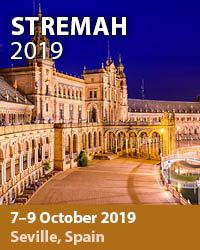
STREMAH 2019 - Call for Papers

stremah19

16th International Conference on Studies, Repairs and Maintenance of Heritage Architecture

7 – 9 October 2019

Seville, Spain

Introduction

STREMAH 2019 is the 16th International Conference on Studies, Repairs and Maintenance of Heritage Architecture. The meeting has taken place on a regular basis since the first conference started in Florence (1989) and continued in Seville (1991); Bath (1993); Crete (1995); San Sebastian (1997); Dresden (1999); Bologna (2001); Halkidiki (2003); Malta (2005); Prague (2007); Tallinn (2009); Tuscany (2011), the New Forest, UK home of the Wessex Institute (2013), A Coruna, Spain (2015) and Alicante, Spain (2017).
The importance of retaining the built cultural heritage cannot be overstated. Rapid development and inappropriate conservation techniques are threatening many heritage unique sites in different parts of world. This conference aims to provide the knowledge required to formulate regulatory policies, to ensure effective ways of preserving the architectural heritage. The series has been most successful and the conference continues to attract a wide range of high quality contributions since it started in 1989.
The meeting addresses a series of topics related to the historical aspects and the reuse of heritage buildings, as well as technical issues on the structural integrity of different types of buildings, such as those constructed with materials as varied as iron and steel, concrete, masonry, wood or earth. Restoration processes require the appropriate characterisation of those materials, the modes of construction and the structural behaviour of the building. This knowledge can be gained through a series of material characterisation techniques, preferably via non-destructive tests. Modern computer simulation can provide accurate results demonstrating the stress state of the building and possible failure mechanisms affecting its stability. Of particular importance are studies related to their dynamic and earthquake behaviour aiming to provide an assessment of the seismic vulnerability of heritage buildings.
This conference brings together contributions from scientists, architects, engineers and restoration experts from all over the world dealing with different aspects of heritage buildings. Papers contained in the volumes in the series have been published in paper and digital format, and widely distributed around the world. They are also permanently archived in the Wessex Institute eLibrary where they are available to the international community (www.witpress.com/elibrary).

Conference Topics

The following list covers some of the topics to be presented at STREMAH 2019. Papers on other subjects related to the objectives of the conference are also welcome.
  • Heritage architecture and historical aspects
  • Learning from the past
  • Surveying and monitoring
  • Maintenance issues
  • Rehabilitation of metallic structures
  • Earth construction
  • Modern (19th/20th century) heritage
  • Ports and coastal heritage
  • Heritage masonry structures
  • Wooden structures
  • Simulation and modelling
  • Material characterization
  • New technologies and materials
  • Corrosion and material decay
  • Seismic vulnerability and retrofit
  • Management and assessment of heritage buildings
  • Re-use of heritage buildings
  • Heritage and tourism
  • Conservation policies
  • Guidelines, codes and regulations for heritage
  • Heritage management
  • Defence heritage
  • Industrial heritage
  • Transportation heritage
  • Social, cultural and economic aspects
  • Adaptability and accessibility
  • Monitoring and damage detection
  • Vernacular architecture
Find out more on the conference webpage.

Monday, 25 February 2019

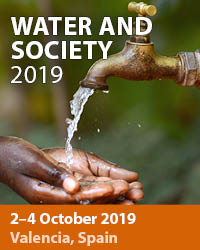
Water and Society 2019 - Call for Papers

ws19

5th International Conference on Water and Society

2 - 4 October 2019

Valencia, Spain

Introduction

The Water and Society Conference is to be reconvened in 2019 following the success of the previous meetings, the first of which was held in Las Vegas in 2011, followed by a meeting in 2013 in the New Forest, UK, home to the Wessex Institute; La Coruna, Spain (2015) and Seville, Spain (2017).
Over the centuries, civilisations have relied on the availability of clean and inexpensive water. This can no longer be taken for granted as the need for water continues to increase due to the pressure from growing global population demanding higher living standards. Agriculture and industry, major users of water, are at the same time those that contribute to its contamination. Water distribution networks in urban areas, as well as soiled water collection systems, present serious problems in response to a growing population as well as the need to maintain ageing infrastructures.
Many technologically feasible solutions, such as desalination or pumping systems are energy demanding but, as costs rise, the techniques currently developed may need to be re-assessed. The Conference will address the interaction between water and energy systems.
This meeting will encourage trans-disciplinary communication on issues related to the nature of water, and its use and exploitation by society. The conference is motivated by the need to bridge the gap between the broad spectrum of social political sciences and humanistic disciplines and specialists in physical sciences, biology, environmental sciences and health, among others.
The socio-political implications of a world short of clean, easily available water are enormous. It will lead to realignments in international politics and the emergence of new centres of power in the world.
Policy makers need to be educated and advised on developing policies and regulations that will support the water systems of tomorrow. The role of society and its involvement with water is paramount. To meet the future demands for water, new standards, new training and additional support roles will best be delivered by those knowledgeable of the new technologies and direction of the industry.
The intention of the Water and Society series of conferences is to review these issues, as well as the more technical aspects of water resources management and quality, to help put forward policies and legislation that will lead to improved solutions for all.
The papers selected for presentation and included in the Conference book are permanently stored in the WIT eLibrary where they are permanently available to the international scientific community (www.witpress.com/elibrary).

Conference Topics

The following list covers some of the topics to be presented at Water and Society 2019. Papers on other subjects related to the objectives of the conference are also welcome.
  • Water resources management
  • Water as a human right
  • Water quality
  • Water resources contamination
  • Water, sanitation and health
  • Water and disaster management
  • Policy and legislation
  • Future water demands
  • Irrigation management
  • Water management
  • Urban water management
  • Management of catchments
  • Groundwater management and conservation
  • Agribusiness
Find out more on the conference webpage.

Wednesday, 20 February 2019

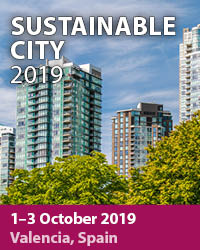
Sustainable City 2019 - Call for Papers

sc19

13th International Conference on Urban Regeneration and Sustainability

1 - 3 October 2019

Valencia, Spain

Introduction

The 13th International Conference on Urban Regeneration and Sustainability addresses all the aspects of urban environment aiming to provide solutions leading towards sustainability. The Sustainable City 2019 conference follows a series of very successful meetings that started in Rio (2000), followed by Segovia (2002), Siena (2004), Tallinn (2006), Skiathos (2008), A Coruña (2010), Ancona (2012), Kuala Lumpur (2013), Siena (2014), Medellin (2015), Alicante (2016) and Seville (2017).
The meeting always attracts a substantial number of contributions from participants from different backgrounds and countries. The variety of topics and experiences is one of the main reasons behind the success of the series. Papers presented at these meetings are archived online in the WIT eLibrary (www.witpress.com/elibrary) where they are easily and permanently available to the international scientific community.
Urban areas result in a series of environmental challenges varying from the consumption of natural resources and the subsequent generation of waste and pollution, contributing to the development of social and economic imbalances. As cities continue to grow all over the world, these problems tend to become more acute and require the development of new solutions.
The challenge of planning sustainable contemporary cities lies in considering the dynamics of urban systems, exchange of energy and matter, and the function and maintenance of ordered structures directly or indirectly supplied and maintained by natural systems. The task of researchers, aware of the complexity of the contemporary city, is to improve the capacity to manage human activities, pursuing welfare and prosperity in the urban environment. Any investigation or planning on a city ought to consider the relationships between the parts and their connections with the living world. The dynamics of its networks (flows of energy matter, people, goods, information and other resources) are fundamental for an understanding of the evolving nature of today’s cities.
Large cities are probably the most complex mechanisms to manage. They represent a fertile ground for architects, engineers, city planners, social and political scientists, and other professionals able to conceive new ideas and time them according to technological advances and human requirements.
The Sustainable City Conference addresses the multidisciplinary components of urban planning, the challenges presented by the increasing size of the cities, the amount of resources required and the complexity of modern society.

Conference Topics

The following list covers some of the topics to be presented at Sustainable City 2019. Papers on other subjects related to the objectives of the conference are also welcome.
  • Urban strategies
  • Planning, development and management
  • Urban metabolism
  • Quality of life
  • The community and the city
  • Infrastructure and society
  • The S3 city: smart, sustainable and safe
  • Eco-town planning
  • Spatial conflicts in the city
  • Urban transportation and planning
  • Architectural issues
  • Sustainable energy and the city
  • Cultural heritage sites
  • Urban conservation and regeneration
  • Environmental management
  • Flood risk
  • Waste management
  • Urban air pollution
  • Health issues
  • Water resources
  • Landscape planning and design
  • Urbanization of rural areas
  • Urban agriculture
  • Intelligent environment
  • Planning for risk and natural hazards
  • Waterfront development
  • Sustainable regeneration and public space
  • Case studies
Find out more on the conference webpage.

Monday, 11 February 2019

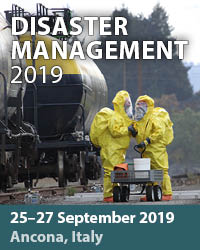
Disaster Management 2019 - Call for Papers

dm19

6th International Conference on Disaster Management and Human Health Risk: Reducing Risk, Improving Outcomes

25 – 27 September 2019

Ancona, Italy

Introduction

The International Conference on Disaster Management is being reconvened following the success of the previous meetings, held at Wessex Institute in the New Forest in 2009, the University of Central Florida in Orlando, USA in 2011, A Coruña, Spain in 2013, Istanbul Technical University, Turkey in 2015 and Seville, Spain, 2017.
This series of conferences originated with the need for academia and practitioners to exchange knowledge and experience on the way to handle the increasing risk of natural and human-made disasters. Recent major earthquakes, tsunamis, hurricanes, floods and other natural phenomena have resulted in huge losses in terms of human life and property destruction. A new range of human-made disasters have afflicted humanity in modern times; terrorist activities have been added to more classical disasters such as those due to the failure of industrial installations for instance.
It is important to understand the nature of these global risks to be able to develop strategies to prepare for these events and plan effective responses in terms of disaster management and the associated human health impacts.
The conference provides a forum for the exchange of information between academics and practitioners, and a venue for presentation of the latest developments. The corresponding volume of WIT Transactions containing the papers presented at the meetings are published in paper and digital format and widely distributed around the world. The papers are also archived in the WIT elibrary (www.witpress.com/elibrary) where they are available to the international community.

Conference Topics

The following list covers some of the topics to be presented at Disaster Management 2019. Papers on other subjects related to the objectives of the conference are also welcome.
  • Disaster analysis
  • Disaster monitoring and mitigation
  • Emergency preparedness
  • Risk mitigation
  • Risk and security
  • Community resilience
  • Socio-economic issues
  • Health risk and disaster psychology
  • Case studies
  • Human factors
  • Multi-hazard risk assessment
  • Risk communications
  • Preparedness and training
  • Learning from disasters
  • Terrorism and man-made disasters
  • Business and service continuity
  • Disaster recovery
  • Integrated systems and solutions for disaster management
Find out more on the conference webpage.

Monday, 4 February 2019

SAFE 2019 - Call for Papers

safe19

8th International Conference on Safety and Security Engineering

23 – 25 September 2019

Ancona, Italy

Introduction

This eighth Conference on Safety and Security Engineering follows the success of the first seven meetings held in Rome (2005), Malta (2007), Rome (2009), Antwerp (2011), Rome (2013), Opatija in Croatia (2015) and Rome (2017). The purpose of the Conference is to provide a forum for the presentation and discussion of the most recent research and industrial developments in the theoretical and practical aspects of safety and security engineering.
Safety and Security Engineering, due to its special nature, is an interdisciplinary area of research and application that brings together in a systematic way, many disciplines of engineering, from the traditional to the most technologically advanced. The conference covers areas such as crisis management, security engineering, natural disasters and emergencies, terrorism, IT security, man-made hazards, risk management, control, protection and mitigation issues, and many others.
The meeting aims to attract papers in all related fields, in addition to those listed under the Conference Topics, as well as case studies describing practical experiences. Due to the multitude and variety of topics included, the list is only indicative of the themes of the expected papers. Authors are encouraged to submit abstracts in all areas of Safety and Security, with particular attention to integrated and interdisciplinary aspects.
The conference is aimed at engineers, scientists, field researchers, managers and other specialists involved in one or more aspects of safety and security.

Conference Topics

The following list covers some of the topics to be presented at Safe 2019. Papers on other subjects related to the objectives of the conference are also welcome.
  • Risk analysis and assessment
  • System safety engineering
  • Incident monitoring and management
  • Information and communication security
  • Cybercrime and health care
  • Fire safety
  • Disaster management
  • Emergency response
  • Critical infrastructure protection
  • Counter terrorism issues
  • Human factors and behaviour
  • Occupational health and safety
  • Transportation safety and security
  • Earthquake safety
  • Modelling and experiments
  • Security surveillance systems
  • Safety standards and regulations
  • Cyber security / E security
  • Loss prevention
  • BIM in Safety and Security
Find out more on the conference webpage.