Friday, 1 June 2018

Urban Growth 2018 - Post Conference Report

1st International Conference on Urban Growth and the Circular Economy

pcr.jpg

8 - 10 May 2018
Alicante, Spain

Overview
Urban Growth 2018
The first International Conference on Urban Growth and the Circular Economy took place at the University of Alicante, Spain. The conference was organised by the Wessex Institute, UK (WIT), represented by Dr Stavros Syngellakis, and the University of Alicante, represented by Prof Joaquin Melgarejo. The meeting was sponsored by WIT Transactions on the Built Environment and the International Journal of Sustainable Development and Planning.
The continuing and rapid growth of cities and their regions of influence has led to the need to find new solutions to facilitate their sustainable development. The quest for the Sustainable City has, until recently, focused on the efficient use of resources with the application of technical advances giving rise to the definition of SMART Cities. The economic model emphasised, however, is still “linear” in the sense that the design and consumption follows the pattern of extraction of natural resources, manufacturing, product usage and waste disposal.
The continuous growth of urban populations has given rise to the emergence of a new model which responds better to the challenges of natural resource depletion as well as waste management. This model has been called the “circular economy”, a recent concept based on the reuse of what up to now has been considered waste, reintroducing them into the productive cycle. The objective of the circular economy is to reduce consumption and achieve savings in terms of raw materials, water and energy, thus contributing to the preservation of resources in order to reach sustainable development.
The circular economy has its roots in environmental economics. Its objective is minimising resources in the production of goods and services. One of the most important of these resources is water, which is becoming a scarce commodity in an ever expanding world whose population demands a better standard of living. The recycling of water is an essential component of the circular economy.
There is no possibility for the success of a long term economic policy without addressing the problems of natural resources and environmental pollution, which will affect the reuse of materials and products.

Opening of the Conference

Dr Stavros Syngellakis from the Wessex Institute, UK opened the conference by welcoming the delegates and thanking the University of Alicante for hosting this event.
Stavros then explained that the main aim of WIT is to provide a medium for knowledge transfer at an international level. This objective is achieved through publications and a series of activities, which include conferences, meetings, research at postdoctoral level and consultation services for industry.
WIT software codes, based on advanced computational methods, are widely used in aerospace, energy and mechanical engineering, amongst others. WIT’s commitment in this regard led to setting up a special office in Boston to serve the US community.
Stavros advised the delegates that all papers presented at WIT conferences, once published, are archived in the eLibrary of the Institute (www.witpress.com/elibrary) where they are easily accessible to the international community. He finished his introductory remarks by pointing out the Institute's strategic position in the South of England and its welcoming environment to visitors.
He then invited Prof Joaquin Melgarejo, the director of the Institute of Water and Environmental Sciences at the University of Alicante, to address the meeting. Joaquin pointed out that the idea for the conference owes much to his friendship with Prof Carlos Brebbia, WIT's late director, to whose memory he paid a warm tribute inviting the delegates to join him in applauding Carlos's life and achievements. He referred to the partnership between WIT and his institute, which is also a multidisciplinary organisation comprising over 50 researchers from various scientific fields. He expressed the hope that the delegates would enjoy the congress and the city of Alicante which is a welcoming place with pleasant climate and plenty of attractions.
On the East coast of Spain and a part of the Costa Blanca, Alicante combines history with a lively coastline and beaches. The city has an old centre containing historic churches, art and archaeological museums, and traditional narrow shopping streets with many bars, restaurants and cafes. Close to the old town, the dramatic Santa Barbara Castle offers excellent views of the city and coastline from its elevated position, and is one of Spain’s largest medieval fortresses.

Invited Speakers

The meeting was enhanced by a series of invited presentations, as follows:
• “The floodable park ‘La Marjal’ (Alicante, South East Spain), as a paradigmatic example of water reuse and circular economy, by Joaquin Melgarejo, University of Alicante, Spain.
• “Urban growth and energy supply in African cities: the case of Ethiopia”, by Roman Brandtweiner, Vienna University of Economics & Business, Austria.
• “Preservation of the hydraulic heritage in landscapes under permanent water stress. New approach to utility and sustainability criteria”, by Maria Magdalena Martinez Almira, University of Alicante, Spain.
• “Efficient water management in the smart city”, by Andres Molina Gimenez, University of Alicante, Spain.
• “Mobility and collateral effects on Aguascaleintes city heritage”, by Alejandro Acosta Collazo, Autonomous University of Aguascalientes, Mexico.
• “Waterfront landscapes in Spanish cities. Regeneration and urban transformations”, by Pablo Marti Ciriquian, University of Alicante, Spain.

Conference Dinner

The ISAC meeting was preceded by dinner at La Barra de César Anca, a pleasant restaurant near the conference venue. Stavros thanked the members for their help in reviewing submitted papers thus contributing to the high standards of the conference. The usual agenda items, namely conference topics, ISAC membership and venue of the next Urban Growth conference were discussed. Useful proposals and suggestions were made which will be carefully considered by the conference organising committee.
The conference dinner took place at Frenezy, one of the finest international restaurants in Alicante offering an excellent service and a rich choice of menu items. The delegates enjoyed a range of exotic, delectable starters before their choice of main course, all accompanied with excellent local wines. They also had the chance to sample a variety of delicious desserts. The evening was characterised by a friendly, congenial atmosphere with lively conversation and high spirits.

Closing of the Conference

At the end of the final session, the meeting was addressed by Prof Andres Molina Gimenez on behalf of Prof Melgarejo and the University Institute of Water and Environmental Sciences. Andres thanked the delegates for their participation, praised the organisation of the conference, expressed his satisfaction with the quality of presentations and wished the delegates' participation in future Urban Growth conferences.
The conference was closed by Dr Stavros Syngellakis who thanked the delegates for their contributions and the host institution for providing its excellent facilities to the conference. He expressed the hope that everyone enjoyed their stay in Alicante and that all participants would meet again in two years' time by attending the next conference in the series, at a time and location still to be arranged.

Related Conferences

Environmental Impact 2018, 20 - 22 June 2018
Waste Management 2018, 17 - 19 September 2018
Sustainable City 2019, 1 - 3 October 2019
Water and Society 2019, 2 - 4 October 2019

Tuesday, 22 May 2018

Sustainable Tourism 2018 - Post Conference Report

8th International Conference on Sustainable Tourism

pcr.jpg

2-4 May 2018
Vienna, Austria

Overview

Sustainable Tourism 2018
The 8th International Conference on Sustainable Tourism took place in Vienna, Austria; it was organised by Wessex Institute, UK (WIT) represented by Dr Stavros Syngellakis, the University of Natural Resources & Life Sciences, Austria, represented by Prof Ulrike Probstl-Haider and Complutense University of Madrid, Spain, represented by Prof Francisco Pineda. The meeting was sponsored by WIT Transactions on Ecology and the Environment and the International Journal of Sustainable Development and Planning.
The first meeting in this successful series was held in Segovia, Spain (2004), followed by Bologna, Italy (2006), Malta (2008), the New Forest, home of the Wessex Institute (2010), A Coruña, Spain (2012), Opatija, Croatia (2014) and Valencia, Spain (2016).
Tourism has become an important component of present day development, not only in economic terms but also for knowledge and human welfare, and is an activity accessible to a growing number of people.
Tourist activities have many more advantages than disadvantages. New forms of economic development and increasing wealth of human societies depend on tourism.
The tourism industry has nevertheless given rise to some serious concerns, including social costs and ecological impacts. Many ancient local cultures have practically lost their identity. Their societies have oriented their economy only to this industry. Both the natural and cultural - rural or urban – landscapes have also paid a high price for certain forms of tourism. These problems will persist if economic benefit is the only target, leading to short-term gains that eventually become ruinous.
Sustainable Tourism 2018 aimed to find ways to protect the natural and cultural landscape through the development of new solutions which minimise the adverse effects of tourism. This can be achieved through new strategies involving the active collaboration of society as a whole.

Opening of the Conference

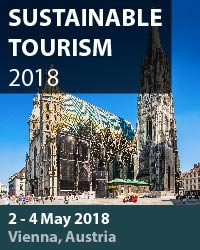
Prof Ulrike Probstl-Haider opened the Sustainable Tourism 2018 conference, welcomed the delegates to Vienna and referred briefly to the importance of tourism as an economic activity. She emphasized the connection of the conference theme to the City and the venue, Schloss Wilhelminenberg Hotel, in particular. This remarkable building was originally built in late 18th century as a lavish palace for an Austrian aristocrat; subsequently it had a number of other illustrious owners until, in middle 19th century, one of them donated it to his wife Wilhelmine from whom it took its name. By the early 20th century, the building was a ruin and had to be replaced by a palace in the Neo-Imperial style. The two world wars necessitated the successive usage of the building by the state for various welfare purposes until year 2000 when a complete refurbishment befitting its standing was launched thus reinventing a former nobleman's residence as a luxury hotel.
Prof Francisco Pineda also welcomed the delegates, referred to the history of the meetings and his long association with them. He wished the participants a rewarding and enjoyable conference experience.
Dr Stavros Syngellakis welcomed the delegates on behalf of the Wessex Institute and explained its main function, namely, knowledge transfer, particularly between different disciplines. This inter-disciplinary approach, Stavros said, exemplifies the Institute's activities and is the reason for its organising this and other conferences around the world in collaboration with different institutions.
The Institute's particular area of expertise lies in the development of advanced modelling techniques for the analysis of complex engineering and scientific problems. This is a field in which the Institute is well known throughout the world. The applications of such tools are extremely varied and one of the reasons for the success of WIT’s inter-disciplinary approach. WIT’s aim to provide a medium for knowledge transfer at an international level is achieved through a series of activities, i.e. publications; meetings, including conferences; research at postdoctoral level; and consultation services for industry.
All papers presented at WIT conferences, such as Sustainable Tourism 2018, are archived in Open Access format in the eLibrary of the Institute (www.witpress.com/elibrary) where they are easily accessible free of charge to the international community.
Stavros paid tribute to the memory of Prof Carlos Brebbia, the founder and late director of the Institute. Professor Brebbia was a brilliant academic but also a great motivator, organiser and communicator. The success of the Institute is entirely due to his tireless pursuits and professionalism. He was an inspirational figure whose legacy will be preserved by everyone who worked with him.

Invited Speakers

The meeting was enhanced by a series of invited presentations, as follows:
• “Current challenges in tourism research in Austria”, by Ulrike Probstl-Haider, University of Natural Resources & Life Sciences, Austria.
• “Rural tourism in Spain, crossroads between nature, socio-ecological decoupling and urban sprawl”, by Francisco Pineda, Complutense University of Madrid, Spain.
• “Networks of historic houses as strategic option for sustainable tourism development. The Venetian villas case”, by Sabrina Meneghello, Ca’ Foscari University, Italy.
• “Escapes from urban heat – the impact of CC on the intention to leave the city for nearby summer destinations”, by Alexandra Jiricka-Purrer, BOKU University of Natural Resources & Life Sciences, Austria.
• “Elements to foster friendly relationship between ports and towns – Photo analysis over boundaries and over time”, by Hiroshi Kato, Hokkaido University, Japan.
• “The marketing value of sustainability in Europe, as seen by tourism developers – an exploratory approach to Portuguese tourism precincts”, by Joao-Manuel Carvalho, University of Lisbon, Portugal.
• “Community-based tourism in rural Japan: Case of network making NPO”, by Yasuo Ohe, Chiba University, Japan.
• “Nonmarket valuation of cultural and environmental impacts on sustainable city tourism in Vienna (Austria)”, by Petra Amrusch, University of Vienna, Austria.
• “Relation of tourist push and pull motivations with their activities: the case of Lithuania”, by Aida Macerinskiene, University of Vilnuius, Lithuania.

Conference Dinner

A well attended ISAC meeting was preceded by a dinner at Villa Aurora, a restaurant with local character and cuisine in attractive green surroundings with art exhibits, located near the conference venue. The organisers expressed their appreciation to the members of the committee for their help in reviewing abstracts and papers thus ensuring the high quality of presentations. Then, there was discussion on the conference topics, the location of the venue for the next conference as well as the possibility of adding new members to the committee. It was agreed that the participants will give these issues serious thought and submit their ideas to the organising committee in writing.
The Conference Dinner took place in the pleasant environment of a typical Viennese restaurant; the delegates were welcomed with a glass of sparkling wine and then served with an excellent three-course meal that included local delicacies. The enjoyable evening was characterised by lively discussions, friendly mood and high spirits.

Closing of the Conference

In her concluding remarks on the final day of the conference, Prof Probstl-Heider praised very warmly its organisation, thanked the audience for their active participation and referred again to the pleasant environment of the venue, which contributed considerably to everyone's feeling of well being.
The Conference was closed by Dr Stavros Syngellakis who thanked the delegates for their contributions and expressed the hope that the delegates found the conference successful in every respect and that they would attend the next conference in the series, at a time and location still to be arranged.

Related Conferences

SDP 2018, 4 - 6 September 2018
Coastal Cities 2019, 11 - 13 September 2019
Sustainable City 2019, 1 - 3 October 2019

Friday, 27 April 2018

Islamic Heritage 2018 - Post Conference Report

2nd International Conference on Islamic Heritage Architecture and Art

pcr.jpg

17 - 19 April 2018
Malta

Overview

Islamic Heritage 2018
The 2nd International Conference on Islamic Heritage Architecture and Art recently took place in Malta, organised by the Wessex Institute, represented by Prof Giorgio Passerini.  The meeting was co-sponsored by WIT Transactions on the Built Environment and the International Journal of Heritage Architecture.
The conference was reconvened following the success of the first meeting in the series which was held in Valencia, Spain, in 2016.   Presented papers dealt with the design of many types of buildings in Islamic countries including, not only the better known public buildings, like mosques, mausolea, citadels and forts, but also houses and gardens, and many others which have also had a profound impact on society.
Islamic Architecture has enriched design with a wide variety of structural shapes including, among others, unique arches, a wide variety of vaults and domes which allow for new forms to be developed.  
As conventional energy resources become scarce, Islamic design heritage can offer invaluable lessons on how to deal in an efficient manner with cases of hard and extreme environments.
Traditional architecture and urban environment in most Islamic countries are now being eroded by overemphasis on global types of architecture and city planning. As a consequence, many regions are losing their identity. The Conference looked at these developments in the light of what the classical Islamic urban designs and architectures have to offer modern society.

Opening of the Conference

Prof Passerini welcomed the delegates in the name of the Wessex Institute and hoped that they would enjoy their visit to Malta, with its historical towns and villages.  Valletta, its capital, was declared European Capital of Culture in 2018, together with Leeuwarden-Friesland in the Netherlands.
Giorgio then explained the aims of WIT, for example providing a medium for knowledge transfer at an international level.  This objective is achieved through a series of activities, i.e. meetings, including conferences; research at postdoctoral level; publications; and consultation services for industry.
The publication of papers is Open Access, which contributes to providing the widest dissemination possible to the work.  Papers archived in our WIT eLibrary (www.witpress.com/elibrary) are downloaded in increasing numbers from colleagues around the world.
Most suitable for this conference is the International Journal of Heritage Architecture, which deals with studies, repairs and maintenance issues.  One of the aims of the Journal is to achieve a better understanding of the influences and cross-fertilisation of different cultures.

Conference Topics

The Conference sessions had the following headings:
Mosques and Minarets
Heritage Architecture
Adaptation of the Islamic heritage in the Modern City
Heritage Interventions between Constants and Variables 
Heritage Studies

Invited Speakers

The meeting was enhanced by a series of invited presentations, as follows:
“Sufism in the Architectural Typology of the Melaka Tengkera Mosque, Malaysia”, by Azizi Bahauddin, University Sains Malaysia, Malaysia
“Using multimedia in documenting and archiving the Islamic architectural heritage of the Holy Mosque area in Makkah city”, by Reem Alsabban, King Abdulaziz University, Saudi Arabia
“The impacts of the UNESCO's built heritage conservation policy (2010-2020) on historic Jeddah built environment”, by Mohammed Bagader, Effat University, Saudi Arabia

The Island of Gozo

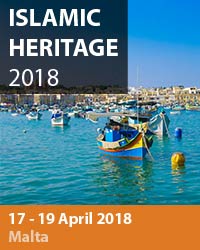
On the first day a guided tour to the island of Gozo was organised, starting at Mgarr Harbour.  This picturesque harbour is full of all manner of sea craft and has a history of slaves, pirates and corsairs who took many of the population away.  Overlooking the harbour is Fort Chambray, which was commissioned in 1749 by Jacques François de Chambray of the Order of St John.  The neo-Gothic Lourdes Sanctuary lies adjacent to the Fort and was built in 1888.
From there, the delegates visited Dwejra located in the South West of Gozo which provides some of the most beautiful scenery on the island.  Hidden behind the towering cliffs is a huge natural pond of shallow water (the Inland Sea) which is fed through a narrow tunnel in the cliff face.  This tunnel links it to the deep blue Mediterranean Sea.  When it is calm fishing boats take visitors down this tunnel to the open sea, where they can view the Fungus rock and the Azure Window at close quarters.  This area is very popular with divers enjoying spectacular underwater sights.
Next, the delegates visited the Saltpans on the north coast of Gozo. These saltpans stretch approximately 3km along the coast and are around 350 years old. They are part of the centuries-old Gozitan tradition of sea-salt production that has been passed down within certain families for many generations.
The final destination was the small fortified town of Cittadella located at the centre of Gozo, on a hill overlooking the capital town of Victoria.  This UNESCO World Heritage Site finds its roots in the late medieval era, although it was inhabited earlier in Neolithic times.
The excursion ended with dinner at the Ta Philip Restaurant in Mgarr Harbour, with its traditional wood-fired oven which optimises cooking whilst preserving the environment.  The delegates were offered locally sourced dishes in a convivial atmosphere.

Valletta

Valletta is the 2018 European City of Culture.  This is a prestigious title and reflects the incredibly rich cultural heritage of this city.  Valletta is essentially Baroque in character, with elements of Mannerist, Neo-Classical and Modern architecture in selected areas, though the Second World War left major scars on the city, particularly the destruction of the Royal Opera House.  The City of Valletta was officially recognised as a World Heritage Site by UNESCO in 1980.
The delegates started their walking tour by viewing the City Gate which is located at the entrance to Valletta.  This most recent gate (there were five in total) was designed by Italian Architect Renzo Piano and built between 2011 and 2014.  As part of the Renzo Piano Project a new parliamentary building was constructed and the ruins of the Royal Opera House were converted into an open-air theatre.  The original Royal Opera House was built in 1866 and was damaged extensively in a fire in 1873, only to be restored in 1877.  The building was one of the most iconic and beautiful in Valletta prior to its destruction by an aerial bombing in 1942 during the Second World War.
Following this, the tour continued down the principal street in Valletta, Republic Street, before viewing the Auberges or “Knight’s Houses”.  There were eight Auberges, however, two were destroyed during the Second World War and a third was demolished to make way for the Anglican Cathedral of St John.  
The tour ended at the Upper Barraca Gardens, which provide stunning panoramic views of the Grand Harbour, one of the most beautiful harbours in the Mediterranean. The gardens were originally used to offer recreation to the knights of the Italian langue of the Order of Saint John, but were opened to the public following the end of the French occupation of Malta in 1800.

Closing of the Conference

The conference was closed by Prof Passerini who thanked the delegates for their contributions and hoped that they would attend other WIT conferences in the future.

Related conferences:

STREMAH 2019, 7 - 9 October 2019
Sustainable City 2019, 1 - 3 October 2019

Tuesday, 13 February 2018

Prigogine Award 2018

The Prigogine Gold Medal 2018 Award Ceremony will take place at the University of Siena, Italy on Tuesday 4th September 2018, on the occasion of the 10th International Conference on Sustainable Development and Planning.
The Prigogine Medal was established in 2004 by the University of Siena and the Wessex Institute of Technology to honour the memory of Professor Ilya Prigogine, Nobel Prize Winner for Chemistry.

STUART KAUFFMAN

Stuart Kauffman
Professor Stuart Kauffman is an American medical doctor, theoretical biologist, and complex systems researcher who studies the origin of life on Earth. He was a professor at the Universities of Chicago, Pennsylvania and Calgary. He is currently Emeritus Professor of Biochemistry at the University of Pennsylvania and affiliate faculty at the Institute for Systems Biology. He has a number of awards including a MacArthur Fellowship and a Wiener Medal.
He is best known for arguing that the complexity of biological systems and organisms might result as much from self-organisation and far-from-equilibrium dynamics as from Darwinian natural selection as discussed in his book Origins of Order (1993). In 1967 and 1969 Kauffman used random boolean networks to investigate generic selforganising properties of gene regulatory networks. Using these models, he proposed that cell types are dynamical attractors in gene regulatory networks and that cell differentiation can be understood as transitions between attractors. Recent evidence suggests that cell types in humans and other organisms are attractors.
In 1971 he suggested that a zygote may not be able to access all the cell type attractors in its gene regulatory network during development and that some of the developmentally inaccessible cell types might be cancer cell types. This suggested the possibility of “cancer differentiation therapy”. He also proposed the self-organised emergence of collectively autocatalytic sets of polymers, specifically peptides, for the origin of molecular reproduction, which have found experimental support.

ILYA PRIGOGINE
Ilya Prigogine was born in Moscow in 1917, and obtained his undergraduate and graduate education in chemistry at the Free University in Brussels. He was awarded the Nobel Prize for his contribution to non-equilibrium thermodynamics, particularly the theory of dissipative structures. The main theme of his scientific work was the role of time in the physical sciences and biology. He contributed significantly to the understanding of irreversible processes, particularly in systems far from equilibrium. The results of his work have had profound consequences for understanding biological and ecological systems.
Prigogine’s ideas established the basis for ecological systems research. The Prigogine Medal to honour his memory is awarded annually to a leading scientist in the field of ecological systems. All recipients have been deeply influenced by the work of Prigogine.
Previous Prigogine Laureates were:
2004 Sven Jorgensen, Denmark
2005 Enzo Tiezzi, Italy
2006 Bernard Patten, USA
2007 Robert Ulanowicz, USA
2008 Ioannis Antoniou, Greece
2009 Emilio del Giudice, Italy
2010 Felix Müller, Germany
2011 Larissa Brizhik, Ukraine
2012 Gerald Pollack, USA
2011 Larissa Brizhik, Ukraine
2013 Vladimir Voeikov, Russia
2014 Mae-wan Ho, UK
2015 Bai-Lian Larry Li, USA
2016 Brian Fath, USA
2017 João Carlos Marques, Portugal
The 2018 Medal will be awarded to Professor Stuart Kauffman, Emeritus Professor of Biochemistry at the University of Pennsylvania and affiliate faculty at the Institute for Systems Biology.

SPECIAL PRIGOGINE LECTURE
on
“A World Beyond Physics:
The Emergence and Evolution of Life”

to be delivered by Professor Stuart Kauffman at the University of Siena, Italy.

For further information about the Prigogine Awards, please contact Professor Carlos Brebbia at the Wessex Institute of Technology.
Professor Carlos Brebbia
Wessex Institute of Technology
Ashurst Lodge, Ashurst
Southampton
SO40 7AA, UK
Tel: +44 (0) 238 029 3223
Fax: +44 (0) 238 029 2853
Email: carlos@wessex.ac.uk
See the following Web pages for details of recent Prigogine Awards:

Friday, 24 November 2017

Urban Agriculture 2018

1st International Conference on Urban Agriculture and City Sustainability

9 - 11 October, 2018

New Forest, UK


Introduction

The aim of the Conference is to review and discuss ways in which urban agriculture can contribute to achieving sustainable cities.
As urban populations continue to increase it is essential to consider ways of reducing their impact in terms of use of natural resources, waste production and climate change.
The increasing number of people in cities requires new strategies to supply the necessary food with limited provision of land and decreasing resources. This will become more challenging unless innovative solutions for growing and distributing food in urban environments are considered.
The scale of modern food production has created and exacerbated many vulnerabilities and the feeding of cities is now infinitely more complex. As such the food system cannot be considered secure, ethical or sustainable.
In the last few years, there has been a rapid expansion in initiatives and projects exploring innovative methods and processes for sustainable food production. The majority of these projects are focused on providing alternative models that shift the power back from the global food system to communities and farmers improving social cohesion, health and wellbeing. It is therefore not surprising that more people are looking towards urban farming initiatives as a potential solution.
These initiatives have demonstrated that urban agriculture has the potential to transform our living environment towards ecologically sustainable and healthy cities. Urban agriculture can also contribute to energy, natural resources, land and water savings, ecological diversity and urban management cost reductions.
The impact urban agriculture can have on the shape and form of our cities has never been fully addressed. How cities embed these new approaches and initiatives, as part of new urban developments and a city regeneration strategy is critical.
The Urban Agriculture conference will address these challenges and search for new solutions.

Conference Topics

The following list covers some of the topics to be presented at Urban Agriculture.  Papers on other subjects related to the objectives of the conference are also welcome.
Development and Planning
  • Urban metabolism
  • History of urban agriculture
  • Integrated urbanism
  • Sustainable land use
  • Urban and peri-urban enterprises
  • Green infrastructures and sustainable urbanism
  • Continuous productive urban landscaping
  • City food chains
  • Food sovereignty
  • Urban distribution and processing systems
  • Market gardens
  • Sustainable urban drainage
  • Water resources and irrigation systems
  • Sustainable food systems
  • Organic farming
  • Food security
Urban Farms 
  • Patchwork farms
  • Pop-up farms
  • Roof top farms
  • Green roofs
  • Vertical greening and farms
  • Hydroponics, aquaponics and aeroponics
  • Hydrogardens
  • Composting in cities
  • Allotment systems
  • Permaculture and agricultural forestry
  • Urban animal farms and bee-keeping
  • Greenhouses
  • Food networks
Socio-Economic Aspects 
  • Community supported agriculture
  • Community cohesion and job creation
  • Community gardens
  • Communities as co-producers
  • School and young urban farmers
  • Education and training
Innovation and Benefits 
  • Closed loops systems
  • Transport and distribution
  • Waste food recovery and recycling
  • Renewable energy resources
  • Healthy cities
  • Care farming
  • Ecological water systems
  • Biofuel production in cities
  • Quality of streets and urban environment
  • Reduction of Urban Heat Island
  • Farm to fork
  • Eco-cities and eco-villaging
  • Show cities
  • Air pollution reductions
  • Organic farming

                                                   Find out more on the conference webpage.

Tuesday, 21 November 2017

Eco-Architecture 2018

7th International Conference on Harmonisation between Architecture and Nature

2 - 4 October, 2018

New Forest, UK


Introduction

The objective of this Conference is to review the challenges and new opportunities of contemporary architecture. These are a result of advances in design and new building technologies, as well as the development of new materials. 
Many of the changes are motivated by a drive towards eco-architecture, trying to harmonise architectural products with nature. Another important issue is the adaptation of the architectural design to the natural environment, learning from nature and traditional construction techniques.
Contemporary architecture is at the threshold of a new stage of evolution, deeply influenced by the advances in information and computer systems and the development of new materials and products, as well as construction processes that will drastically change the industry.
Emphasis is placed on the minimum use of energy at each stage of the building process, the design by passive systems, life cycle assessment, resources optimisation and rehabilitation.
Never before in history have architects and engineers had such a range of new processes and products open to them. In spite of that, the construction industry lags behind all others in taking advantage of a wide variety of new technologies. This is understandable, due to the inherent complexity and uniqueness of each architectural project. Advances in computer and information systems, including robotics, offers the possibility of developing new architectural forms, construction products and building technologies which are just now starting to emerge.
Changes have also taken place in the way modern society works and lives, due to the impact of modern technologies. Patterns of work have been disrupted and changed, affecting transportation and the home environment. The demand is for a new type of habitat that can respond to the changes and the consequent requirements in terms of urban environment.
The conference will deal with topics such as building technologies, design by passive systems, design with nature, cultural sensitivity, life cycle assessment, resources and rehabilitation and many others including case studies from many different places around the world. The list of topics gives an idea of the scope of the meeting, papers on other topics relating to the conference objectives, are welcome.
All conference papers are archived online in the WIT eLibrary (www.witpress.com/elibrary) where they are easily and permanently available in Open Access format to the international community.
Architecture is very multi-disciplinary, attracting many other professions. In this regard the conference participants are expected to be engineers, planners, computer experts, physical scientists, sociologists and economists, as well as architects, providing all of them an opportunity to share information and ideas with their colleagues from different regions of the world.
The seventh International Conference follows the six successful meetings which started in the New Forest, home of the Wessex Institute of Technology, in 2006; and followed in the Algarve (2008); A Coruna (2010), the island of Kos (2012), Siena (2014) and Alicante (2016).

Conference Topics

The following list covers some of the topics to be presented at Eco-Architecture 2018. Papers on other topics related to the objectives of the conference are also welcome.
  • Energy efficiency
  • New building technologies
  • Computer aided design
  • Robotics and artificial intelligence
  • City agriculture
  • Urban landscaping and green spaces
  • Transportation and habitat
  • Community participation
  • Design and construction integration
  • Flexible housing
  • Floating buildings
  • Smart houses
  • New materials and products
  • Contemporary habitat typologies
  • Houses as a working environment
  • Management and maintenance
  • Design with nature
  • Tall buildings and urban design
  • Building technologies
  • Tall buildings and environment
  • Ecological impacts of materials
  • Bioclimatic design
  • Water quality
  • Green facades
  • Ecological and cultural sensitivity
  • Design by passive systems
  • Adapted reuse
  • Life cycle assessment and durability
  • Transformative design
  • Sustainability indices in architecture
  • Recycle, reuse, reduce and recovery
  • Building flexibility
  • Architectural visualisation
  • New techniques: building information modelling
  • Education and training
  • Case studies

                                                     Find out more on the conference webpage.

Friday, 17 November 2017

Urban Transport 2018

24th  International Conference on Urban Transport and the Environment

19 - 21 September, 2018

Seville, Spain


Introduction

The International Conference on Urban Transport and the Environment has been successfully reconvened for nearly 25 years, always attracting a wide international spread of delegates. It is well-established as the premier event of its type. 
The continuing requirement for better urban transport systems and the need for a healthier environment has added to the increasing success of this annual meeting which attracts international delegates from many different countries. Innovative systems, new approaches and original ideas need to be thoroughly tested and critically evaluated before they can be implemented in practice, which highlights the importance of the meeting. Moreover, there is a growing need for integration with telecommunications systems and IT applications in order to improve safety, security and efficiency. The Meeting also addresses the need to solve important pollution problems associated with urban transport in order to achieve a healthier environment.
The variety of topics covered by the conference reflects the complex interaction of the urban transport systems with their environment and the need to establish integrated strategies. The aim is to arrive at optimal socio-economic solutions while reducing the negative environmental impacts of current transportation systems.
The conference started in Southampton in 1995; continuing in Barcelona (1996); Acquasparta, Italy (1997); Lisbon (1998); Rhodes (1999); Cambridge, UK (2000); Lemnos, Greece (2001); Seville (2002); Crete (2003); Dresden (2004); Algarve (2005); WIT Campus in the New Forest (2006); Coimbra (2007); Malta (2008); Bologna (2009); Limassol (2010); Pisa (2011), A Coruña (2012), Kos (2013), Algarve (2014), Valencia (2015) , Crete (2016) and Rome (2017).
All papers are included in the WIT Transactions and Journals and archived in the Wessex Institute’s eLibrary at www.witpress.com/elibrary, where they are permanently freely available to the international community.

Conference Topics

The following list covers some of the topics to be presented at Urban Transport 2018. Papers on other subjects related to the objectives of the conference are also welcome.
  • Urban transport planning and management
  • Urban strategies
  • Public transport systems
  • Environmental impact
  • Economic and social impact
  • Safety and security
  • Travel behaviour studies
  • Traffic control
  • Transportation modelling and simulation
  • Infrastructure development
  • Intelligent and advanced transport systems
  • Transportation integration
  • City logistics
  • Inter-modal transport systems
  • Mass transport strategies
  • Freight transport
  • Railway systems
  • Public policies and governance
  • Port and city
  • Mobility and public space
  • Life cycle management
  • Innovative and electric transportation
  • Eco-mobility transport systems
  • Integrated network systems
  • Traditional and alternative fuels and energy
  • Smart city transport
  • Driverless cars
  • Asset management

                                                        Find out more on the conference webpage.